How State Compacts Recalibrate Free Spin Redemption Thresholds in Multi-Jurisdictional Poker Networks
Greta Krüger · Jun 22, 2026
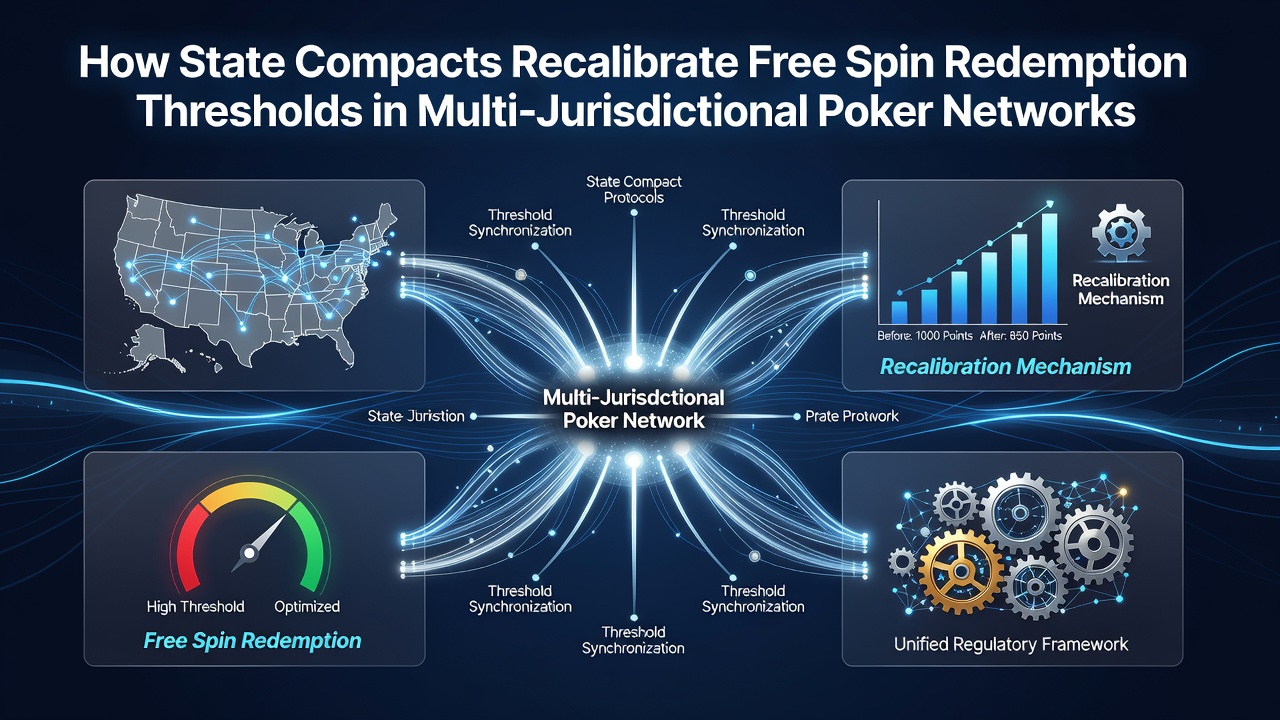
How State Compacts Recalibrate Free Spin Redemption Thresholds in Multi-Jurisdictional Poker Networks
State compacts establish formal agreements between jurisdictions that govern shared poker operations, and these documents directly influence how free spin redemption thresholds get adjusted when networks span state lines. Operators track player activity across connected platforms, then apply unified rules that reflect each participating state's regulatory requirements, which creates a recalibration process that balances local mandates with network-wide consistency.Core Mechanics of Compact-Driven Adjustments
Compacts outline specific formulas for redemption thresholds based on aggregated player data from all involved states, and this approach requires operators to recalculate minimum play requirements whenever a new jurisdiction joins the network. Data from regulated platforms shows that thresholds often rise or fall by 15 to 25 percent following compact amendments because each state contributes distinct player volume metrics and risk parameters. Researchers at the National Conference of State Legislatures have documented how these formulas incorporate cross-border transaction logs to prevent players from exploiting lower thresholds in one state while accessing rewards earned in another.
Network administrators implement these changes through centralized software that automatically updates redemption criteria for every connected account. The process involves mapping each state's contribution to the overall player pool, then applying weighted averages that account for differences in session length and wager size. Those who've studied interstate poker agreements note that June 2026 saw several networks finalize updates after Michigan and Virginia ratified revised compact language that emphasized synchronized free spin rules.
Regional Variations and Their Network Impact
States maintain unique definitions of eligible play for free spin accumulation, yet compacts force alignment that overrides standalone policies. Pennsylvania platforms, for example, historically allowed redemption after 200 hands of qualifying play, while New Jersey required 250 hands before the two states expanded their shared network agreement. After the compact revision, both jurisdictions settled on a 225-hand threshold that reflects combined activity across the entire system.
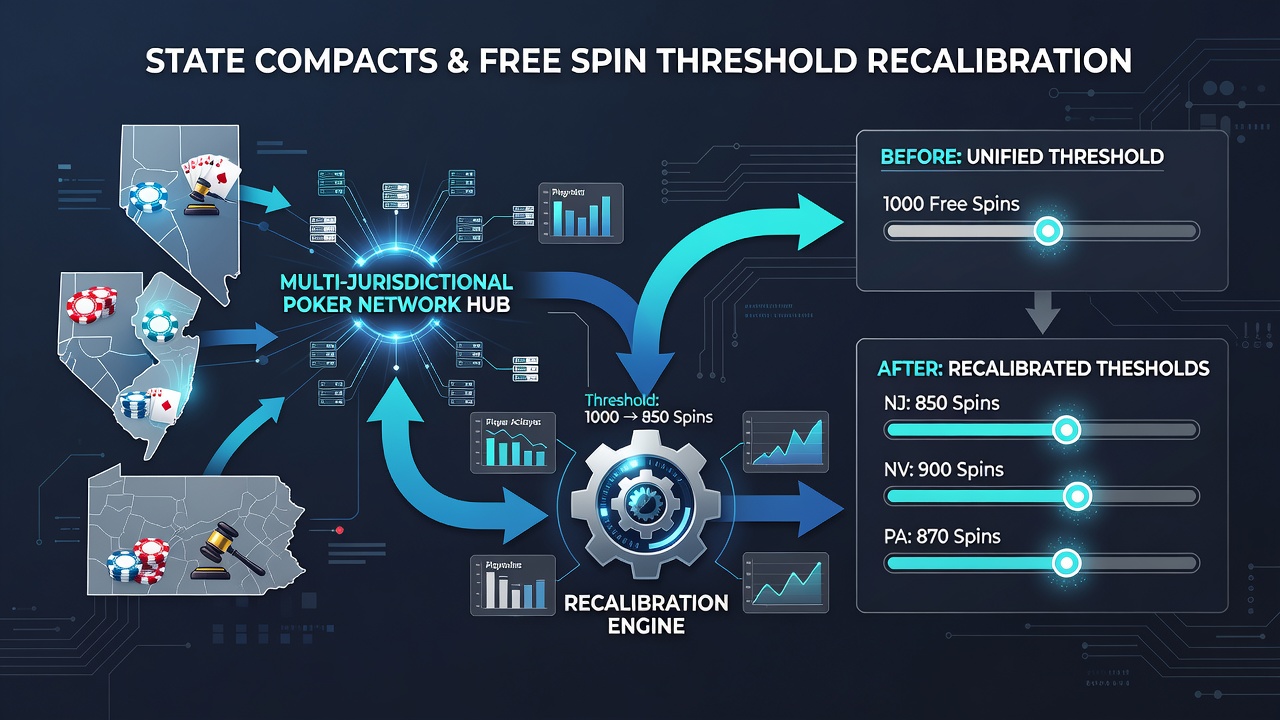
Delaware and Connecticut followed a similar path when their compact language incorporated real-time data feeds from shared liquidity pools. Observers note that operators now monitor daily hand counts from each state and trigger threshold reviews whenever one jurisdiction's volume deviates more than 10 percent from the network average. This method keeps redemption access proportional to actual participation rather than allowing one state's players to set the pace for everyone else.
Data Integration and Compliance Protocols
Multi-jurisdictional networks rely on unified reporting systems that feed state-specific compliance teams while maintaining a single redemption engine. These systems pull transaction records from each participating regulator, including the Nevada Gaming Control Board and the British Columbia Lottery Corporation, then normalize the figures into a common format. Software engineers build reconciliation layers that flag discrepancies before they affect player accounts, which reduces the chance of uneven threshold application.
Academic studies from the University of Nevada, Reno's gaming research center have examined how these protocols affect redemption frequency across state lines. The findings indicate that networks using compact-mandated averaging experience 12 percent fewer disputes over denied redemptions compared with platforms that handle each state independently. Compliance officers conduct quarterly audits that verify the averaging calculations against raw data from every jurisdiction, and any detected variance triggers immediate threshold recalibration.
Player Experience Across Connected Platforms
Players who move between states within the same network encounter consistent redemption rules because compacts eliminate the need to meet separate thresholds for each location. Account balances reflect cumulative activity measured under the unified standard, which simplifies tracking for frequent travelers and multi-state residents alike. Operators publish updated threshold tables on their platforms after each compact amendment, allowing users to see exactly how many hands or wager amounts now qualify for free spin access.
Case examples from existing networks demonstrate that these adjustments maintain fairness when player pools grow unevenly. One documented instance involved a network where one state's sudden increase in recreational players threatened to lower overall thresholds for everyone; the compact formula automatically weighted the change and prevented dilution of requirements for higher-volume jurisdictions.
Conclusion
State compacts continue to shape redemption thresholds by enforcing data-driven formulas that respect every participating jurisdiction's regulatory framework. Networks that adopt these agreements achieve operational consistency while satisfying local oversight requirements, and the June 2026 updates illustrate how ongoing negotiations keep pace with expanding interstate poker participation. Regulatory bodies and operators maintain the systems that translate compact language into practical threshold calculations, ensuring players experience uniform rules regardless of which state hosts their current session.