How Weather Data Influences Table Game Payout Adjustments Across US Regional Casinos
Greta Krüger · Jun 20, 2026
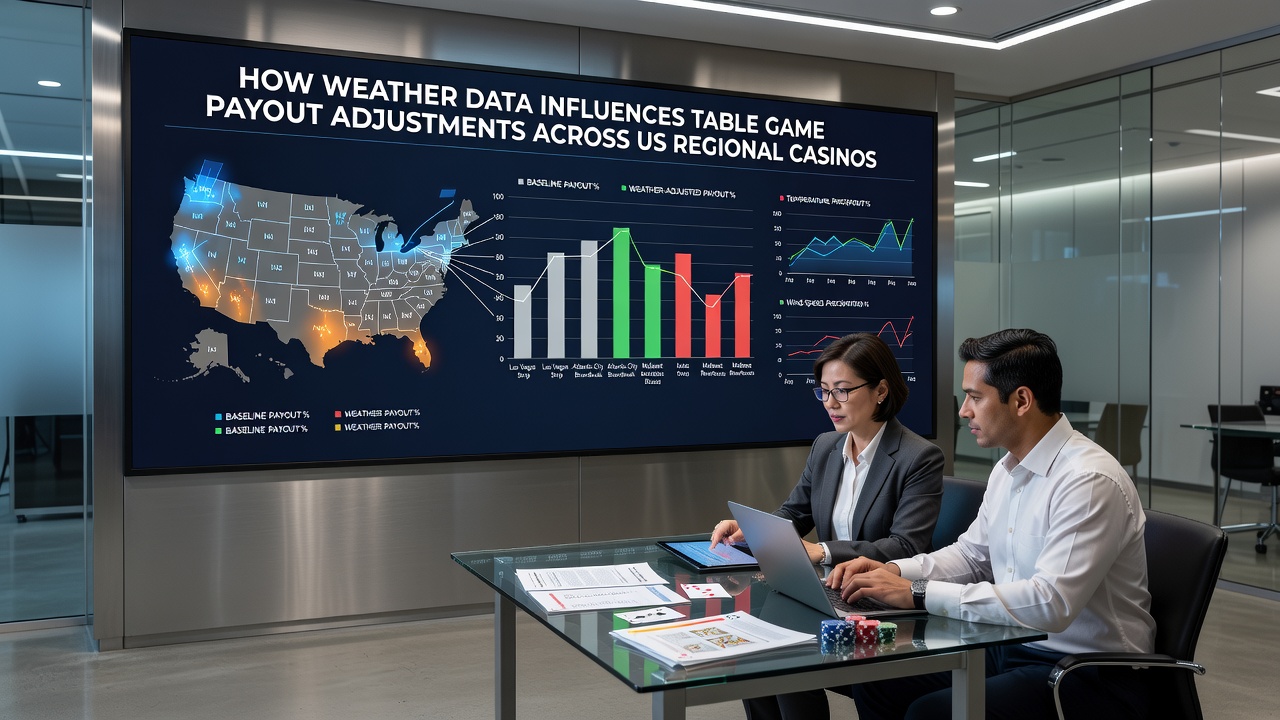
How Weather Data Influences Table Game Payout Adjustments Across US Regional Casinos
Regional casinos across the United States integrate weather data into operational systems that track player attendance and table game activity, and analysts observe direct connections between forecasted conditions and adjustments to promotional payout structures. These facilities, including riverboat venues in the Midwest and tribal properties in the Southwest, rely on inputs from the National Weather Service alongside internal analytics platforms to anticipate shifts in visitor volume. When models predict heavy rainfall or extreme temperatures, operators often recalibrate minimum bet thresholds and temporary bonus offers on games such as blackjack and roulette to maintain revenue stability.
Weather Forecasting Integration in Casino Operations
Casino management teams receive daily briefings that combine meteorological forecasts with historical foot traffic records, and this synthesis allows for precise timing of payout modifications. Data from regional monitoring stations feeds into algorithms that flag potential downturns in table game participation, prompting supervisors to authorize limited-time increases in promotional returns during anticipated slow periods. Observers note that such protocols have become standard in properties located along the Mississippi River corridor, where sudden storms can reduce daily attendance by measurable percentages within hours.
Studies conducted through partnerships with state university research departments reveal consistent patterns in how precipitation levels correlate with wager volumes on table games. Facilities respond by extending promotional windows for side bets or match-play incentives when forecasts indicate prolonged adverse conditions, thereby encouraging sustained play among remaining patrons. These adjustments remain within regulatory boundaries set by bodies such as the Nevada Gaming Control Board and similar commissions in other jurisdictions.
Regional Differences in Adjustment Strategies
Properties in the Gulf Coast region demonstrate particularly sophisticated responses to hurricane season projections, incorporating extended-range forecasts that extend several weeks ahead. When models indicate elevated storm probability, operators in Louisiana and Mississippi adjust payout percentages on select table game variants through approved promotional overlays rather than altering base game mathematics. This approach maintains compliance while addressing expected dips in tourism-driven traffic.
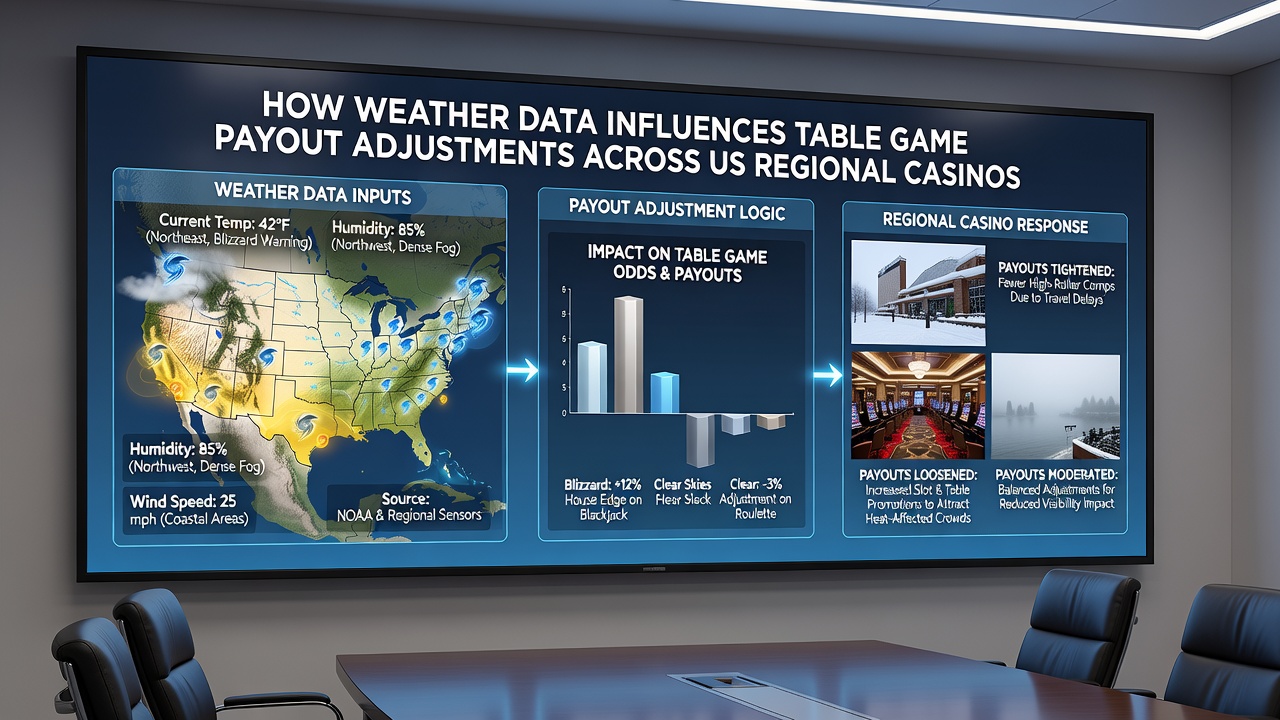
Midwestern riverboat casinos follow parallel yet distinct methods, focusing on winter weather events that disrupt highway access. Analysts from the American Gaming Association have documented cases where forecasted snowfall totals above six inches trigger preemptive modifications to table minimums and bonus structures, and these changes help stabilize daily hold percentages across blackjack, craps, and poker rooms. The timing of such interventions often aligns with advance weather alerts issued in early morning hours before peak arrival periods.
Impact on Player Behavior and Revenue Metrics
Research compiled from multiple state gaming reports shows that weather-linked payout adjustments produce measurable effects on session length and average wager size among regional players. When promotional enhancements activate ahead of forecasted disruptions, participants extend playtime even as overall attendance declines, and aggregate revenue figures remain closer to baseline projections. These outcomes appear most pronounced in markets where drive-up visitors constitute the majority of table game traffic.
By June 2026, several multi-property operators had expanded their use of machine-learning models that ingest real-time weather station data alongside loyalty program metrics, enabling finer-grained decisions about when and how to modify table game incentives. Regulatory filings indicate that such systems undergo periodic audits to ensure adjustments do not exceed approved promotional limits, and compliance records reflect consistent adherence across jurisdictions.
Conclusion
Weather data has emerged as a core component of table game management protocols throughout US regional casinos, driving targeted payout adjustments that respond to predicted changes in attendance and player activity. Facilities achieve these modifications through promotional mechanisms that stay within established regulatory frameworks, and ongoing integration of forecasting tools continues to refine the precision of such interventions. The approach demonstrates how external environmental variables translate into operational decisions that affect both short-term revenue stability and longer-term player engagement patterns.