Seasonal Harvest Cycles Shape Wager Patterns at Rural Riverfront Casinos
Ellis Lehmann · Jun 8, 2026

Seasonal Harvest Cycles Shape Wager Patterns at Rural Riverfront Casinos
Seasonal harvest cycles create predictable shifts in local economies along major waterways, and these fluctuations register clearly in wager volumes at rural riverfront gaming sites. Communities dependent on row crops such as corn, soybeans, and wheat experience income spikes when combines roll through fields in autumn, while earlier months tied to planting and equipment purchases often show tighter household budgets.
Data collected from properties along the Mississippi and Missouri rivers indicate that average daily handle rises between 12 and 18 percent during peak harvest windows compared with shoulder periods, according to records maintained by state regulatory bodies. Observers note the pattern repeats across multiple years even when commodity prices vary.
Understanding Regional Agricultural Timelines
Planting typically begins in April and extends into May across the Midwest and lower Mississippi Valley, when farmers purchase seed, fertilizer, and fuel. These outlays reduce discretionary spending, and gaming facilities record correspondingly lower table-game drop and slot coin-in during those weeks. Growth phases occupy June through August, a stretch when labor demands stay moderate yet cash remains tied up in standing crops. Harvest starts in September for early soybeans and stretches into November for corn, releasing cash that circulates quickly through nearby towns.
Researchers tracking riverfront venues in Iowa and Illinois have documented that wager increases concentrate on weekends immediately following local elevator payments, with the strongest gains appearing in the final two weeks of October. Similar timing appears in Mississippi and Louisiana parishes where cotton and sugarcane harvests follow slightly later schedules.
Measured Effects on Daily and Weekly Volumes
Slot performance data from six rural properties reveal that coin-in per machine climbs most sharply on the second and third weekends after harvest payments arrive. Blackjack and poker tables show parallel though smaller percentage gains, while sports-book handle remains relatively flat because those markets draw from different customer segments. Electronic table games occupy an intermediate position, registering volume lifts of roughly 9 percent during the same intervals.
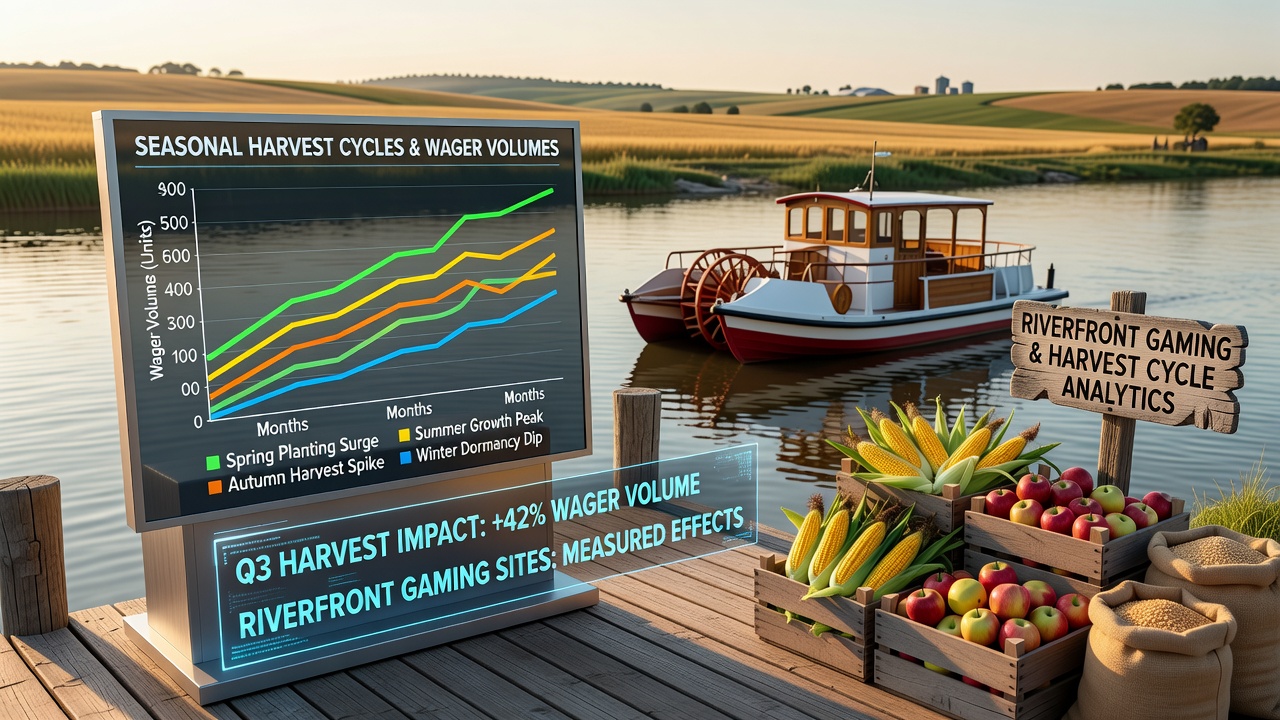
Payment timing matters. When elevators issue checks within a seven-day window, the subsequent fourteen days produce the clearest uptick; staggered payments across several weeks dilute the visible effect. Weather events that delay harvest by even ten days shift the entire volume curve accordingly, a relationship confirmed in operational reports covering the 2024 and 2025 seasons and preliminary figures extending through June 2026.
Local Economic Channels
Harvest cash moves through equipment dealers, fuel suppliers, and seasonal labor crews before reaching gaming floors. Riverfront casinos benefit from this circulation because many facilities sit within a thirty-minute drive of multiple farming communities and maintain marketing calendars that align with local payment schedules. Direct mail and loyalty offers timed to harvest windows generate response rates 20 to 25 percent above annual averages at the same properties.
Ancillary spending on food, beverage, and hotel rooms also rises, although the largest incremental revenue still derives from gaming itself. Facilities that adjust staffing and machine denominations during these periods capture more of the available handle without requiring capital investment.
Comparative Regional Patterns
Properties in the upper Midwest exhibit tighter correlation between soybean harvest dates and volume spikes because soybean payments arrive in concentrated batches. Venues farther south, where sugarcane and rice dominate, show broader plateaus that last four to six weeks. Both patterns remain statistically significant after controlling for tourism and holiday effects, according to analyses prepared by university agricultural economists.
Regulatory filings submitted to state gaming commissions through mid-2026 continue to reflect these seasonal signatures, indicating the relationship persists even as online options expand in adjacent jurisdictions.
Conclusion
Harvest cycles supply a recurring, measurable driver of wager volumes at rural riverfront gaming sites. Agricultural payment schedules, local economic multipliers, and operational adjustments combine to produce repeatable lifts in handle that regulatory and academic records have tracked across multiple seasons and regions.