Tracing Player Decision Patterns in Multi-Deck Blackjack Through Real-Time Data From Regulated Digital Platforms
Erik Otto · Jun 13, 2026
Tracing Player Decision Patterns in Multi-Deck Blackjack Through Real-Time Data From Regulated Digital Platforms
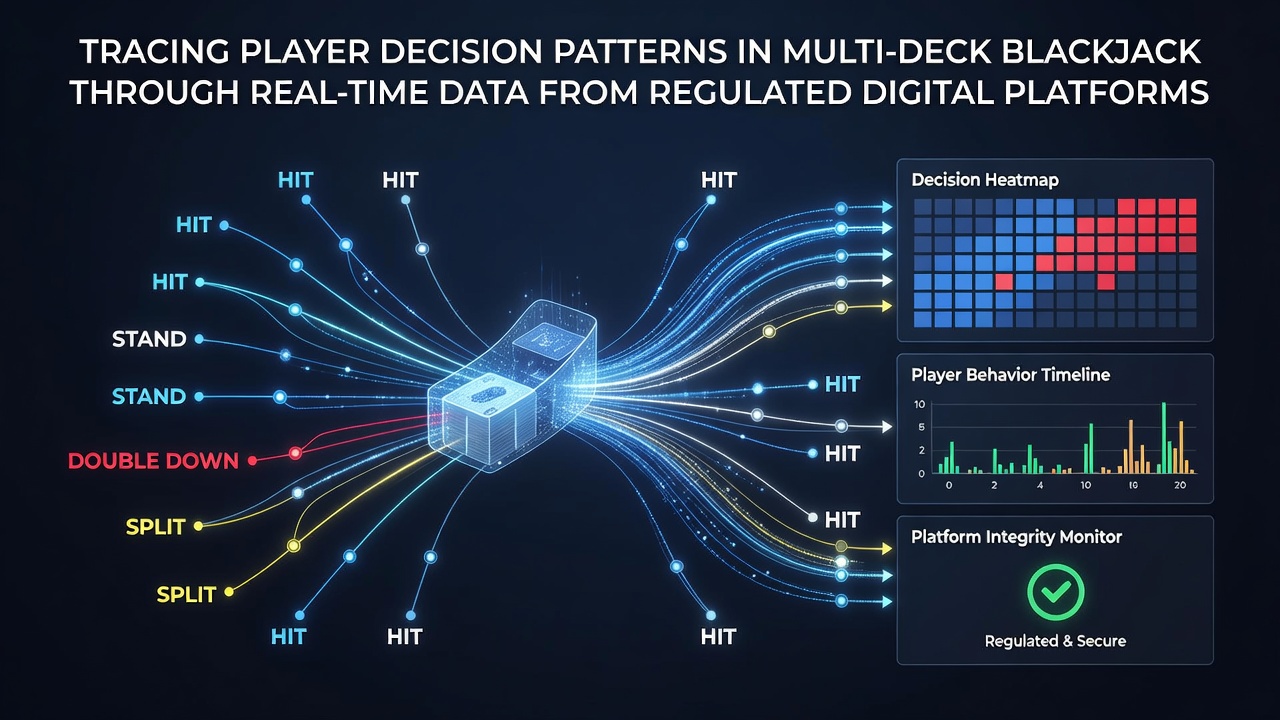
Regulated digital platforms capture extensive logs of every action taken during multi-deck blackjack rounds, and these records allow researchers to map how players respond to changing card counts, bet sizes, and table conditions across thousands of sessions. Data streams from licensed operators record whether participants choose to hit, stand, double, or split in specific deck compositions, which creates detailed profiles of decision tendencies that differ from those observed in single-deck or shoe-based land-based games.
Data Streams and Collection Methods
Operators in jurisdictions such as New Jersey and Michigan transmit anonymized event-level records to centralized monitoring systems every few seconds, and these feeds include the exact rank and suit of cards dealt plus the timestamped choice each player makes. Because multi-deck games typically use six or eight decks shuffled at intervals, the running count fluctuates more gradually than in single-deck formats, yet players still adjust their aggression levels when the remaining cards favor higher-value outcomes. Analysts at the New Jersey Division of Gaming Enforcement receive aggregated summaries that highlight clusters of conservative play during negative counts and increased doubling frequency when the true count rises above plus two.
Real-time processing pipelines apply machine-learning models to flag deviations from basic strategy, and these models compare observed actions against optimal mathematical tables derived from combinatorial analysis. Platforms record not only the final decision but also the elapsed time between card reveal and player input, which provides an additional dimension for identifying hesitation patterns that often precede departures from expected strategy.
Observed Patterns in Multi-Deck Environments
Studies of session data collected between 2024 and early 2026 show that participants in eight-deck games tend to stand on soft seventeen more frequently than basic strategy recommends when the dealer shows a six, and this tendency strengthens after the first two hours of continuous play. Researchers note that bet-spread ratios widen modestly as the shoe progresses, yet the magnitude of increases remains smaller than theoretical card-counting models predict because most recreational accounts maintain flat or slowly ramped wagers. Split decisions on pairs of eights against a dealer ten occur at rates roughly twelve percent below optimal frequency, while insurance bets appear at rates that track closely with the proportion of high cards remaining in the shoe.
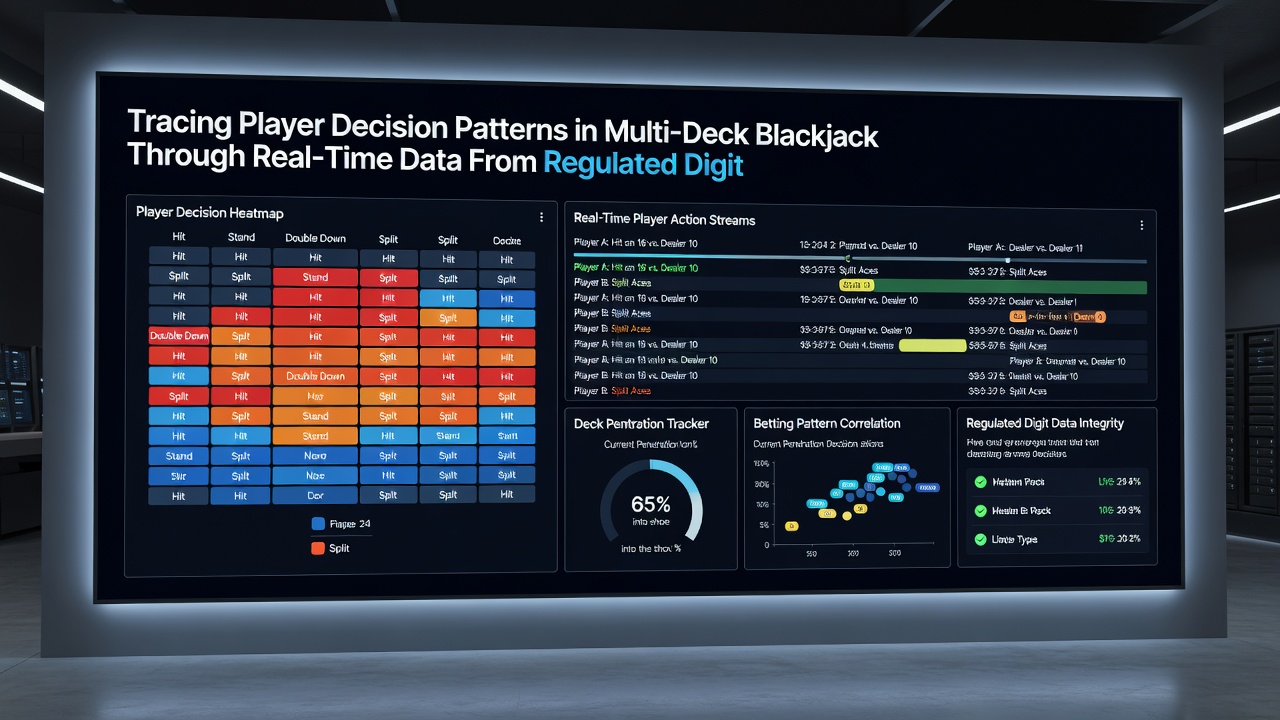
Heatmaps generated from platform telemetry reveal vertical bands of elevated hit rates on hard totals of fifteen and sixteen precisely when the running count drops below minus three, and these bands widen during late-night hours when session durations extend beyond ninety minutes. Conversely, doubling on ten against a dealer four occurs at higher-than-expected rates during the first thirty minutes of new sessions, suggesting that early-session optimism influences risk tolerance before fatigue sets in.
Regulatory Oversight and Analytical Standards
Beginning in June 2026, several state regulators introduced requirements for operators to submit quarterly pattern-analysis reports that quantify deviations from basic strategy by true-count interval, and these reports must incorporate confidence intervals derived from at least fifty thousand qualifying hands per game variant. The standards encourage use of open-source combinatorial engines so that independent auditors can replicate findings without proprietary code. Data-sharing agreements between platforms and academic groups at institutions such as the University of Nevada, Reno allow controlled access to sanitized datasets while preserving player anonymity through differential privacy techniques.
Compliance teams cross-reference decision logs against known advantage-play signatures, and systems automatically generate alerts when sequences exceed predefined statistical thresholds. These alerts trigger manual review rather than immediate account restrictions, because isolated departures from optimal play remain common among recreational users who simply misremember strategy charts.
Applications for Platform Design and Player Tools
Operators incorporate aggregated pattern insights into responsible-gaming modules that surface contextual prompts when telemetry detects repeated deviations during unfavorable counts, and these prompts appear as neutral strategy reminders rather than direct coaching. Game-configuration teams adjust side-bet frequencies and minimum-wager ladders based on observed tolerance curves extracted from the same datasets. Because multi-deck variants dominate online traffic, pattern libraries now differentiate between six-deck and eight-deck behavior so that rule tweaks can target the specific product mix offered in each market.
Conclusion
Continuous collection of decision-level telemetry from regulated multi-deck blackjack platforms supplies a growing empirical foundation for understanding how players navigate count-dependent choices, and regulatory mandates effective in June 2026 ensure that the resulting analyses remain transparent and replicable. The combination of high-resolution logs, standardized reporting, and independent verification continues to refine both game integrity measures and player-protection features across digital environments.