Understanding the Correlations Between State Tax Policies and Casino Bonus Structures in the US
Ellis Lehmann · Jul 22, 2026
Understanding the Correlations Between State Tax Policies and Casino Bonus Structures in the US
State tax policies on gaming revenue create measurable effects on how casino operators design and fund bonus structures for players, with variations appearing across jurisdictions that license both land-based and digital platforms. Data collected from regulatory filings shows that states imposing higher effective tax rates on gross gaming revenue often see operators adjusting promotional budgets downward to maintain profit margins, while lower-tax environments allow for more aggressive bonus offerings that include larger match percentages and extended playthrough requirements. Observers note that these patterns emerge because operators calculate their net revenue after taxes before allocating funds to marketing incentives such as welcome bonuses, free spins, and loyalty rewards.
Tax Rate Variations Across Key Gaming States
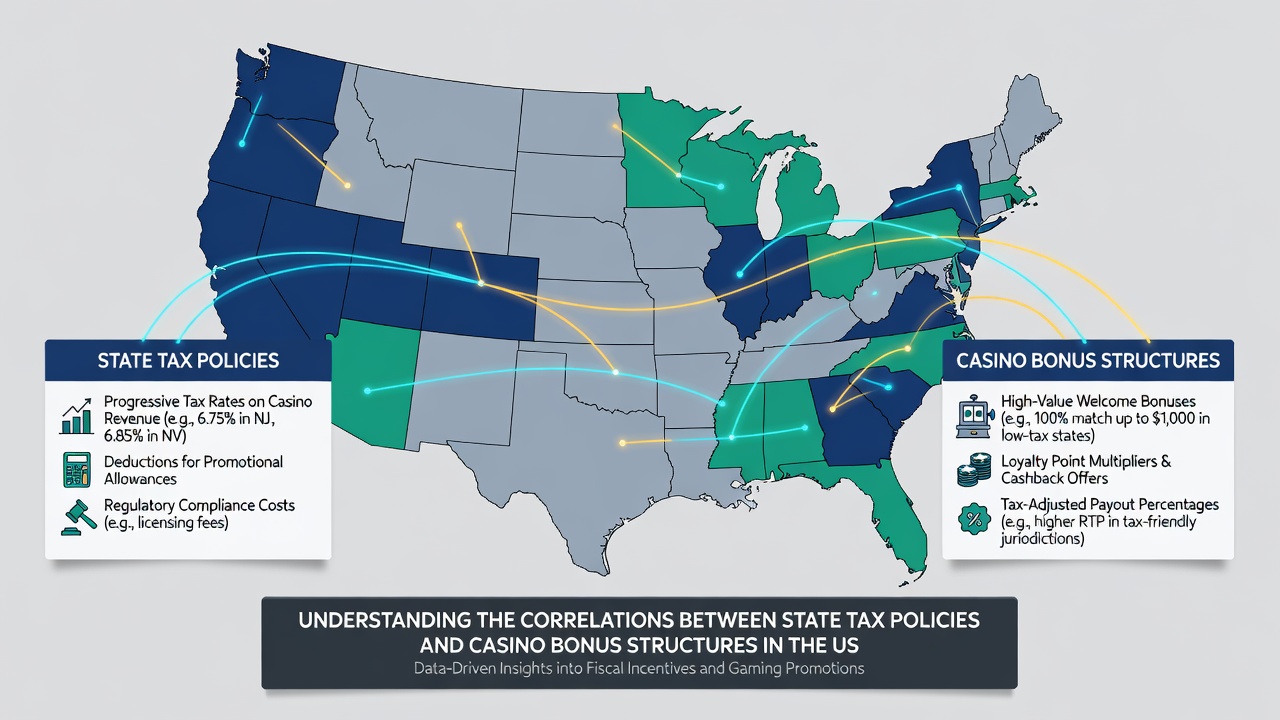
States maintain distinct tax frameworks that directly influence operator decisions on player incentives, with rates ranging from single-digit percentages in some historic markets to over 50 percent in newer online gaming jurisdictions. Nevada applies a tiered tax structure that tops out around 6.75 percent for most operators, whereas Pennsylvania levies rates exceeding 50 percent on online slots revenue and similar products. Michigan and New Jersey sit in the middle with combined state and local obligations that reach 35 to 40 percent in certain categories. These differences matter because operators in high-tax states must recover a larger share of revenue through player volume rather than through expansive bonus programs that reduce the house edge on promotional play.
Research indicates that bonus structures in lower-tax states frequently feature higher deposit match amounts and lower wagering multipliers, patterns confirmed in annual reports submitted to state gaming boards. In contrast, operators in high-tax environments tend to favor smaller, targeted bonuses tied to specific game types or loyalty tiers, which helps control the cost of player acquisition while complying with tax obligations calculated on gross revenue before deductions for promotional play.
How Operators Adjust Bonus Structures Based on Tax Burdens
Operators respond to tax policy through several mechanisms that affect bonus availability and terms, including adjustments to maximum bonus caps, changes in eligible game contributions toward wagering requirements, and shifts in the frequency of no-deposit offers. When tax rates rise, companies often reduce the overall promotional budget as a percentage of revenue, which translates into fewer bonus opportunities or stricter conditions that limit player redemptions. Figures from multi-state operators reveal that states with tax rates above 40 percent show average bonus values approximately 15 to 25 percent lower than those in states taxing below 15 percent, after controlling for market size and competition levels.
Those who track regulatory submissions point out that bonus funding frequently appears as a marketing expense deducted after tax calculations in some jurisdictions but treated differently in others, creating additional layers of complexity for operators managing cross-state portfolios. This treatment influences whether companies expand bonus programs during periods of revenue growth or maintain steady offerings regardless of tax fluctuations.
Case Examples from Multiple Jurisdictions
One study of operator behavior in Illinois and Indiana demonstrated that the introduction of higher tax brackets on sports betting revenue coincided with reductions in certain deposit match bonuses offered to new accounts, while existing loyalty programs remained largely unchanged. Similar shifts appeared in West Virginia after tax adjustments took effect, where operators consolidated bonus categories and emphasized free play credits over cashback offers. Data shows these modifications occurred without corresponding changes in player demand, suggesting tax policy as the primary driver rather than market conditions alone.
Researchers examining New York’s mobile sports betting launch noted that the state’s elevated tax rates prompted operators to launch bonus structures with higher playthrough thresholds compared with neighboring Connecticut, where tax obligations sit lower. These differences persist even though both markets launched around the same period and target overlapping player demographics. As of July 2026, updated filings from several operators continue to reflect these tax-linked variations in promotional terms across state lines.
Regulatory Oversight and Reporting Requirements
State gaming commissions require detailed reporting on bonus expenditures and their impact on taxable revenue, which creates transparency around the relationship between tax policy and promotional activity. According to the American Gaming Association, operators must categorize bonuses as either deductible or non-deductible depending on state rules, affecting how much revenue remains subject to taxation. This classification system encourages operators to structure bonuses in ways that optimize tax treatment while still attracting players.
Additional data compiled by university-affiliated gaming research centers shows that states conducting regular audits of bonus programs identify fewer discrepancies when tax rates remain stable, whereas tax increases often coincide with temporary spikes in reporting adjustments as operators recalibrate their offerings. These patterns hold across both commercial and tribal gaming operations subject to state compacts.
Conclusion
State tax policies establish clear parameters within which casino operators develop bonus structures, with higher rates generally correlating to more conservative promotional strategies and lower rates supporting broader incentive programs. Evidence from regulatory filings, operator reports, and cross-state comparisons confirms that these correlations influence bonus size, frequency, and terms in measurable ways. As additional states expand gaming options and adjust tax frameworks, the connections between tax policy and player incentives will likely remain a central factor in how the industry allocates marketing resources.